
Technical Article
The Microgrid Journey
Having been involved in hundreds of microgrid projects leads to some emerging patterns. It takes a lot of effort to make a project happen. Oftentimes, projects can go sideways because it takes so many different parties to take a project from ideation to operation. Without a holistic view of the microgrid journey, projects are bound to encounter more challenges than expected.
This is a particularly challenging issue for microgrids when compared to single-asset-class projects like solar-only or baseload prime power applications. Microgrid use cases and component lifespans vary widely.
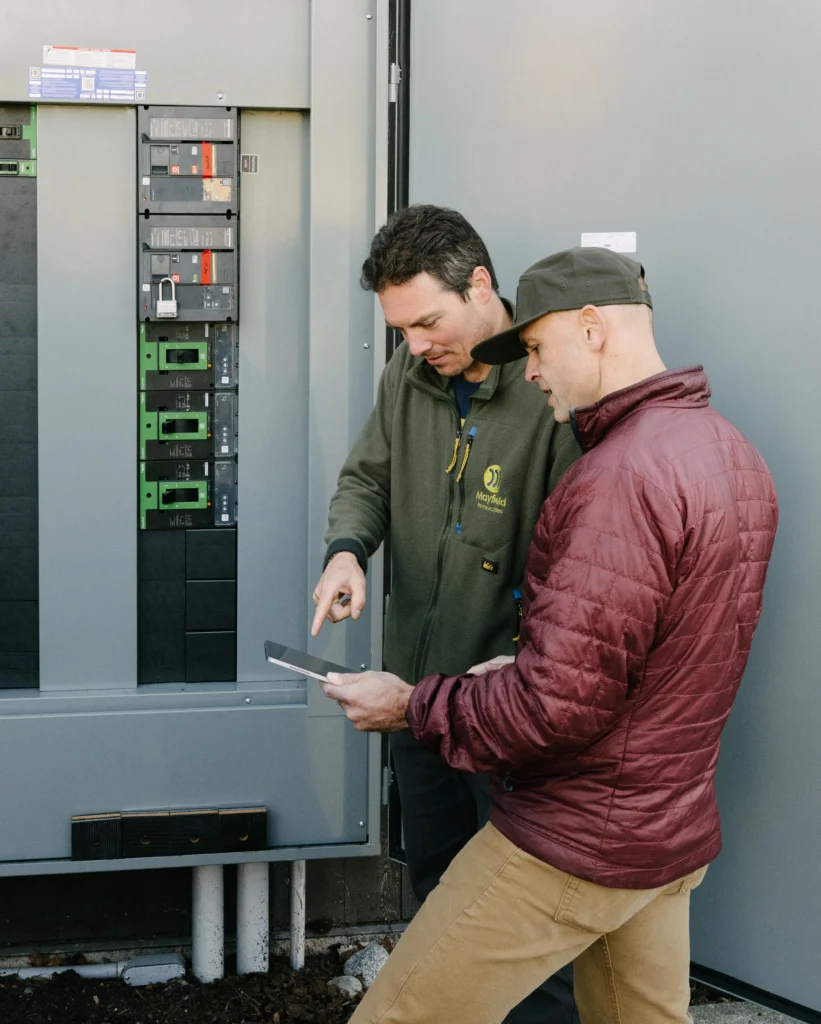
Microgrid projects are new enough that there is not sufficient standardization around terminology, scope, and phases in the development lifecycle. A diverse set of expertise is required to design, build, and operate a microgrid.
This article aims to provide a high-level overview of the key phases of a microgrid project lifecycle, focusing on the key milestones rather than giving names to different phases. Our goal at Mayfield Renewables is to begin sketching out a roadmap for the budding microgrid industry by highlighting a few key hazards to avoid and opportunities for value creation.
Author’s note: The traditional definition of a microgrid specifies that the system can “island” from the grid, a requirement to provide power during grid outages, i.e. resilience. In this case, we expand the definition to also include any multi-distributed-energy-resource (DER) system that provides a benefit to the site host. For example, a grid-tied solar-plus-storage system would qualify as a “microgrid” for the purposes of this article. The ability to island has no bearing on the milestones below.
Despite notorious complexity, there are a few key milestones shared by all microgrid projects: offtake agreement closed, financing closed, notice to proceed for construction (NTP), commercial operation date (COD), and decommissioning.
Milestone 1: Signed Off-Take Agreement
Having spent a significant amount of my career in the development world, I always smile a little bit on the inside when I see project plans begin with a signed off-taker agreement. It hurts my heart to see zero space to the left of that milestone, because I know how much effort is required to achieve that first step. For every one hundred “good” proposals that get put in front of a C&I customer for a microgrid project, at most five to ten will be signed. And that’s not to mention all of the less attractive proposals that are rejected out of hand.
Obviously, the key aspect of this stage is providing a compelling value proposition for the off-taker, and then negotiating terms that enable enough value for the off-taker, the developer, and financing party. This can be very challenging because many of those details are unknown at this stage in the project lifecycle. Details impacting project CAPEX and OPEX such as equipment selection and the cost of capital are not yet finalized. So the developer must negotiate terms that have sufficient margin for those parameters to change a reasonable amount before the project can be financed. However, if later milestones are not carefully considered when negotiating the off-take agreement, key constraints may cause the project to stall several months or even a year later. The terms in the off-take agreement must be acceptable to the financing party. The initial microgrid design must be constructible at a cost that is consistent with the current assumptions. These are just a few examples.
Key risks to mitigate before crossing Milestone 1:
-
Design changes
-
Project cost uncertainty
-
Unachievable offtaker value proposition
-
Project revenue uncertainty e.g. valid incentive assumptions
Milestone 2: Financing Closed
Once a signed off-take agreement is in hand, the project moves to the second milestone, where preparations are made for underwriting, or financial closure with a capital provider. Most C&I microgrid projects are financed by third parties for various reasons. The site owner may not have the ability to monetize tax incentives. They may not have capital available for the project. Or they may simply be more comfortable investing that capital into their facilities or core business, investments that they are much more familiar with and therefore have higher confidence in the projected returns or payback periods.
Financing entities will generally want to see that you have site control and interconnection approval before playing ball, which is why finding an off-taker is the first milestone. After the deal structure is finalized, the financing terms, including cost of capital, are put in place based on a host of factors that will be considered by the financing party. This part of the process can take several weeks or even months, depending on the complexity of the project and the off-taker.
Once the financing agreements are closed to secure financing the project is considered Financially Closed. The financing party will release limited funds to reduce remaining uncertainties and secure funding so that they can give notice to proceed, which brings us to Milestone 3.
Key risks to mitigate before crossing Milestone 2:
-
Financing costs and other conditions that impact project economics
-
Permitting or environmental risks
Milestone 3: Notice to Proceed (NTP) with Construction
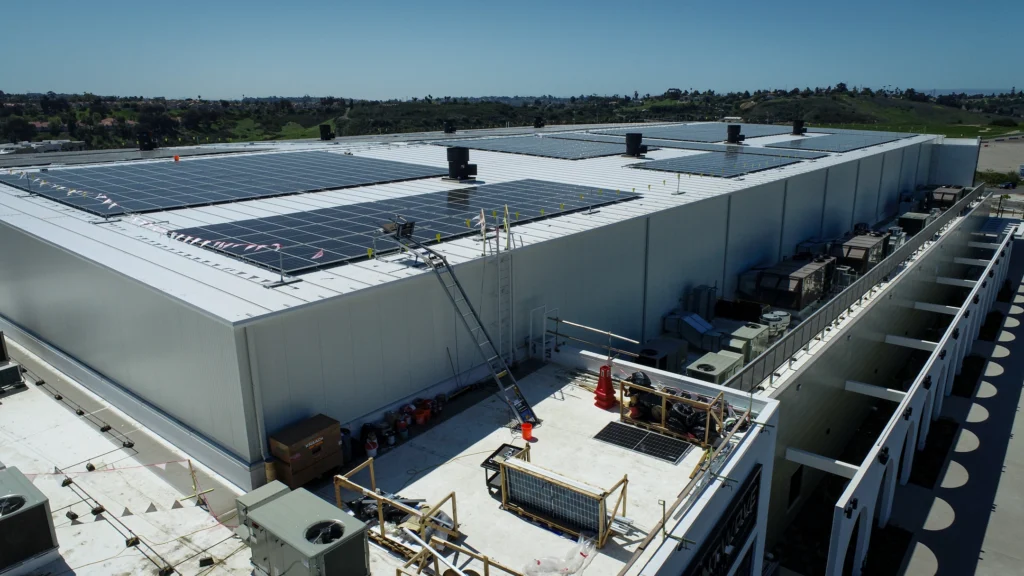
By this point, underwriting is generally completed, construction financing has been secured, project planning has been done thoroughly and completely, and there is very little uncertainty around scope or execution. The project is ready to move forward–or not; from a practical standpoint, this is the last chance to stop the project before incurring major expenses.
The name of the game in Milestone 3 is to move as quickly as possible through construction while sticking to the project plan. Scope changes in this phase are the most costly in terms of both time and money. This is when all the preliminary planning, feasibility analysis, etc. really comes to fruition.
The utility will issue permission to operate (PTO) after post-construction witness testing. Note that PTO does not mean the system is fully operable yet. Depending on the financing method, further steps may be necessary before the system is ready to turn on.
Key risks to mitigate before crossing Milestone 3:
-
Long lead-times for key equipment (e.g. batteries or thermal generators)
-
System designs are feasible and meet key local requirements
-
Construction cost and timeline uncertainty
Milestone 4: Commercial Operation Date (COD)
We made it. We’re at the finish line, so to speak. The microgrid has been fully installed, electrically connected, and approved by the utility. Financing is in place, and any off-taker agreements are active. Tax equity investment needs to close during this phase in order for those investors to qualify for tax credits like the ITC. There may be a lag period of a few weeks, or longer, between PTO and Milestone 4. It’s time to flip the switch and start generating electricity, providing bill savings and backup power, etc., etc.
As the microgrid enters its operating phase, O&M agreements take front stage. Agreements with the site host, equipment vendors, or other stakeholders are in place to ensure the microgrid provides the performance benefits that were promised and will yield the expected financial returns.
Key risks to mitigate before crossing Milestone 4:
-
Tax equity investment secured
-
Utility requirements satisfied for permission to operate
Milestone 5: Decommissioning
Just kidding about the whole “finish line” thing. Developers must also peer into the future to consider what happens as microgrid components retire. What’s considered “end-of-life” can vary widely for different parts of the microgrid. Generally, PV modules will be expected to last 25-30 years, while inverters, batteries, and AC equipment may last 10-15 years. Someone has to pay to retrofit, decommission, and/or recycle equipment, and those costs and responsibilities should be baked into the preliminary planning.
Key risks to mitigate before crossing Milestone 5:
-
Unexpected costs
-
Environmental regulations
Conclusion
The throughline for all five of the above milestones is that complexity leads to financial uncertainty that must be addressed with feasibility analysis and planning. Microgrids are much harder to develop than single-asset-class projects and are relatively new investments for financiers to wrap their heads around. As a developer moves through the microgrid journey, the cost impact of a scope change expands quickly. So start planning early, get a thorough feasibility study, and make sure all stakeholders are aligned as early as possible.
Mayfield Renewables is an engineering consultancy specializing in commercial and industrial PV and microgrid engineering. Contact us today for a consultation.

