

Technical Article
A Peek Inside the 2026 Education Summit: Repowering PV Systems
The U.S. market alone has installed over 23 GW of commercial-scale solar since 2010. With each passing year, more of these existing projects will reach end of life, run into warranty issues, or have premature equipment failures that justify what the industry calls a “repower.” Repower projects involve changing or updating a system's equipment in a way that requires re-engineering the system itself. This sets repowers apart from a simple like-for-like swap, where the new equipment matches the electrical characteristics and certifications of the existing (replaced) equipment.
“Repowering PV Systems” will be one of our sessions at the upcoming Mayfield Renewables Education Summit in Chicago, Illinois. Led by Mayfield designers Hamilton Hutchinson and Mike Morse, the session will cover development and engineering best practices for repower projects. In this article, we’ll provide a glimpse into the session material.

What Counts as a Repower
"Repower projects" can range from targeted component swaps to complete re-engineering. No two repowers will be exactly the same, but in the Summit session instructors Hamilton and Mike will share common reasons for repowers and questions that are essential to ask in all cases.
From our experience, we generally consider there to be two main types of repower projects: PV module replacement and PV inverter replacement. At the Education Summit, we’ll provide a case study for each type of repower and share our lessons learned as the project engineer.
Why Aging Systems Might Need Repowering
The canary in the coal mine for repower projects is usually a noticeable dip in performance. The root cause of that performance dip could stem from a number of factors, but most often traces back to equipment failure.
The core components that make up a PV system have different operational lifespans (about 10-15 years for PV inverters and 25-30 years for PV modules). Therefore, if a PV system is expected to run for 25+ years, it should be assumed that at least one inverter replacement will take place during that period. Developers should not overlook this “reinvestment” cost when estimating total project costs.
Contractual agreements—regarding system ownership, offtake, ancillary services, etc.—may also impact repowers. If, for example, a site host has a 15-year power purchase agreement (PPA) in place with an offtaker, both parties are incentivized to keep the array performing optimally for the entire 15-year period. When every kilowatt-hour matters to the bottom line, proactive repowers (prior to equipment failure) may pencil out.
It Is Not Just a Swap, It Is New Value
A repower can bring more to the table than simply restoring a system to working order. Adding energy storage to an existing PV array opens up new revenue streams. Updating to newer inverters often means better monitoring, less maintenance, and refreshed warranty terms. Some projects see a genuine bump in overall system efficiency once older, less capable equipment is replaced with current technology.
The Parts of a Repower Most Teams Underestimate
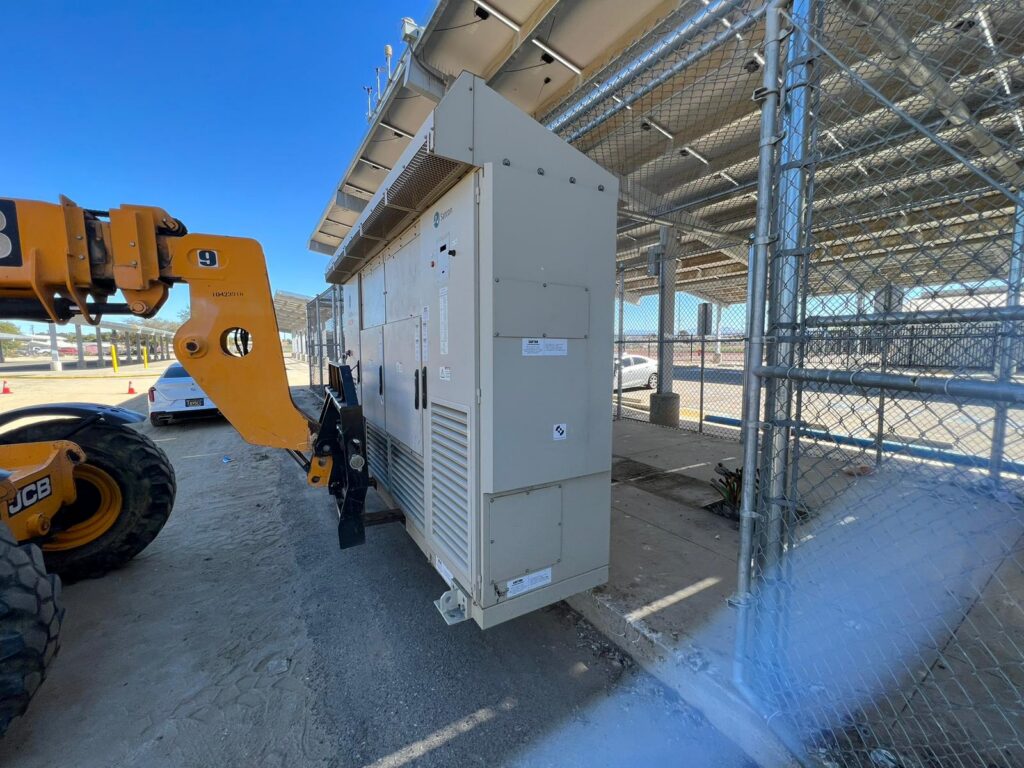
A repower is often more complex than designing a brand new system, mainly because the existing equipment and site conditions create constraints that a new-build never has to work around. At Mayfield Renewables, our first question for repower projects is always: What existing equipment can we reuse, and what truly needs to be replaced? Upfront engineering investment to find creative ways to reuse existing conduit, switchgear, and other balance of system components can trim later-stage procurement and construction costs, among other benefits.
Keeping as much existing equipment as possible reduces waste, but can introduce system design challenges. PV inverter capacities and topologies have evolved significantly just in the past decade. Whether the existing inverters are string or central, grounded or ungrounded, transformerless or galvanically isolated will all have design implications. Similarly, PV module capacities and acceptable string lengths have increased and must be considered in any repower project. The two components also impact each other: the PV array layout will affect the PV inverter input voltage range.
An experienced PV engineering firm will not only understand how systems are built today, but also how they were built before. Knowing the history of PV system design trends is an asset in a successful repower project.
Join Us in Chicago
Interested in learning more about repowering? We’ll be leading technical training sessions about repowering, code compliance, development best practices, and much more at our third-annual Education Summit in Chicago on September 29th and 30th, 2026. We hope to see you there!
From new builds to repowering, Mayfield Renewables delivers design and engineering consulting in the mid-market scale across the United States. Contact us today for a consultation.