
Technical Article
Introducing the Mayfield Standard: A Developmental Framework for Commercial Microgrid Projects
When you think about it, cooking a really good meal and developing a fully functional microgrid system aren’t all that different. In both cases, you’ll be heavily reliant on technique and experience, and the work you put in early will pay off later. Precise knife cuts will reduce the risk of unevenly cooked ingredients, much like proper feasibility analysis will ensure the system you end up building can meet its performance goals. Knowing whether to use a cast-iron or nonstick pan to sear a steak can make all the difference, as can knowing whether to use a motorized breaker or contactor to island your microgrid.
Where the two disciplines differ is in the amount of resources available. Cookbooks like Julia Child’s “Mastering the Art of French Cooking” will tell you everything you need to know to go from an empty fridge to a full table. Cooking best practices, tips, and tricks are increasingly ubiquitous and readily accessible online. But there is no recipe book nor any formal industry standard to develop commercial multi-asset projects, even as demand for distributed energy projects is on the rise.

Microgrids, or systems that integrate multiple distributed energy resources (DERs), are highly complex and often invite many cooks into the kitchen. Developers, engineers, financiers, and offtakers each bring different assumptions about what needs to happen, when, and by whom. Meanwhile, the relevant codes, standards, and core technologies that undergird project planning continue to evolve. These factors combine to cause misalignment, missed scopes, and project delays; especially for mid-sized behind-the-meter, islandable systems.
An industry standard is needed now more than ever to establish a mutual understanding amongst key project development stakeholders, namely: renewables developers and EPCs, engineering firms of the relevant disciplines, electrical utilities, and financiers.

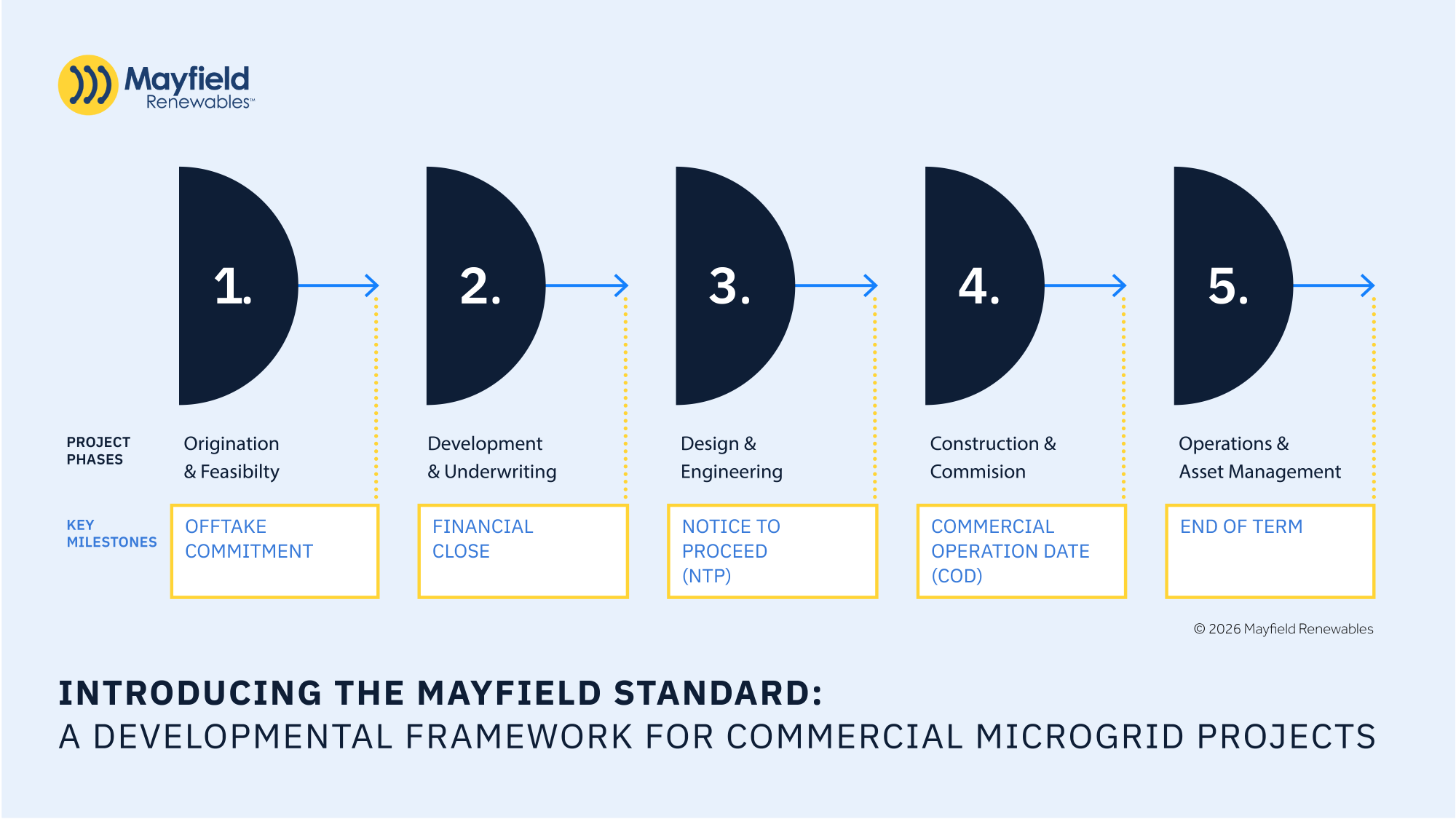
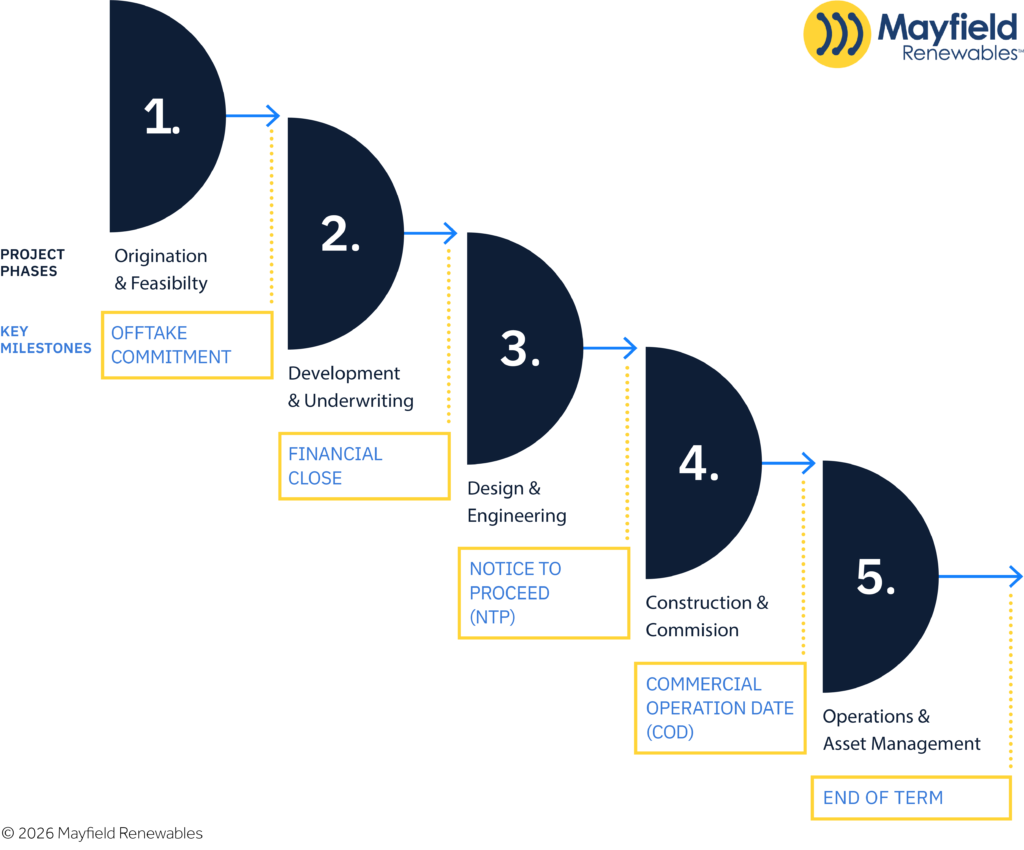
Mayfield Renewables is building that standard—a holistic, broadly-applicable development framework to minimize risks for commercial-scale projects. The goal of the Mayfield Standard is to create a comprehensive, vendor-agnostic reference that defines every “can’t miss” scope item across the full project lifecycle, from origination through end-of-term. A recipe book that can answer the question: What are the key ingredients required to move my project from one phase to the next, and who’s responsible for each scope item?
Mayfield is uniquely positioned to develop such a standard. Backed by two decades of engineering and consulting experience on thousands of projects nationwide, Mayfield brings a unique perspective to the project lifecycle. We share our insights through industry education while balancing a 30,000-foot strategic view with a rigorous focus on technical engineering details. We have poured our collective experience—with external stakeholder input—into the Mayfield Standard.
Download a copy of the Mayfield Standard white paper below, which outlines our vision for the Standard and explains the five phases and milestones that are universal across different project types. This marks the beginning of a much larger rollout. Over the next few months, we will publish more resources related to the Mayfield Standard. To stay up to date on these developments, be sure to sign up for our newsletter.
-


