
Technical Article
How Early Engineering Decisions Can Reduce Cost Overruns for Solar + Storage Projects
Early decisions in an engineering project can have downstream consequences. In certain cases, when decisions have not been fully vetted or key stakeholders are not wholly aligned on the primary objectives of the project, system performance may vary from expectations and cost overruns during design, construction, and operation may occur.
A general rule of thumb applies in these situations: The more assets involved in an engineering project (e.g., a PV array, a stationary BESS, or a linear generator), and the more use cases a system needs to serve (e.g., backup power, peak demand shaving, ancillary services), the more complexity is introduced and the more valuable the preliminary planning stage becomes.
The main question to consider at the onset of a project is whether the team is building the right thing, and whether the major stakeholders involved agree that it is the right thing. This is a broad question, so the examples throughout this blog will outline common issues to look for in early stages of project planning.
Key Points
- Cost overruns often trace back to unresolved misalignment between stakeholders on system objectives, not just technical shortfalls.
- Combining use cases, such as resilience plus demand response, may require upsizing energy storage or other system components beyond initial assumptions.
- Confirming grid-forming capability and utility-preferred equipment prior to the design phase will mitigate the risk of costly late-stage equipment substitutions.
- A conceptual sequence of operations gives the EMS or controls provider a documented baseline to execute controls programming in the later development stages.
Determining System Use Cases: Which Functions Can This System Perform?
Which functions can (or must) this system perform, given the space, budget, and other known limitations of the site? This should be one of, if not the first, questions asked and may require a feasibility study to answer with a meaningful degree of confidence.
As just one example, a BESS system owner might be interested in providing backup power while also participating in a demand response program through their local utility. The BESS must then be sized and programmed to achieve both goals. Does that fit within the budget or space constraints for the project? A feasibility study can model many potential systems or use cases to identify the best fit with a higher degree of confidence, and this process can go a long way towards achieving stakeholder alignment.
Equipment Selection: Which Products Will Work for This Project?
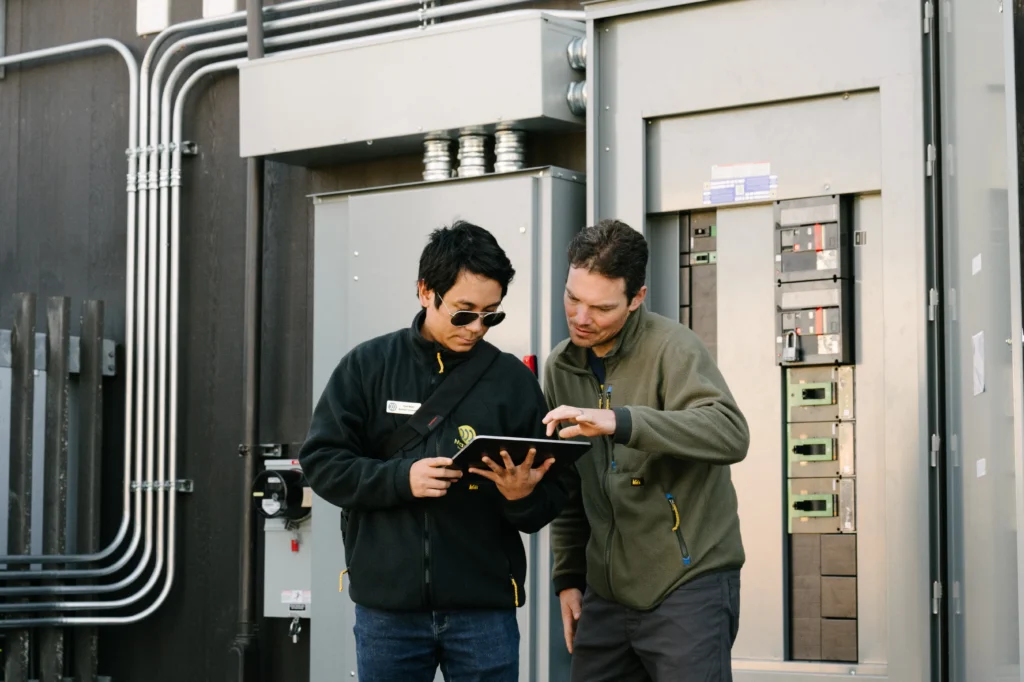
Equipment vendors may need to be contacted directly to confirm whether their products offer the specific functionality a project requires. If backup power is one of the project goals, for example, the power conversion system for the battery energy storage system must be capable of grid forming.
Additionally, some utilities have preferred equipment lists which may be wide ranging, including everything from PV inverter to relay model to grid isolation methodology preferences. Developers and engineers should not overlook this important step. This is where prior experience and knowing the right question to ask—and when to ask them—can make a significant impact to the project cost and timeline.
Equipment Integration Strategy
Another important piece of the puzzle is equipment integration strategy, particularly when a project involves multiple original equipment manufacturers (OEMs) rather than a single integrator. We’re seeing more “integrated” or “all-in-one” options on the market today, but there will never be a commercial-scale project that doesn’t involve nuance and custom engineering. Working toward true system-level compatibility and coordination can present a major challenge, especially for microgrids and other projects that combine many different asset types into a single system.
Equipment integration is yet another case where experience and communicativeness matter. Has your engineering firm worked on projects with similar asset mixes in the past? Are the equipment vendors responsive and helpful in determining the path to compatibility with the rest of the system?
Contractual clarity is also important. More equipment vendors means more warranties and more parties to spread liability amongst should an incident occur. Best practice is to clearly establish which vendor will be responsible for troubleshooting or warranty claims before issues arise, so parties aren’t left pointing fingers at each other while the issue goes unresolved for extended periods.
Integration touches on many aspects of system design and planning. Equipment selection should be downstream from establishing functional goals, and upstream from system design. Another critical conversation during this middle period relates to controls, which we’ll discuss in the following section.
Controls: How Will the Many Devices in the System Coordinate with Each Other?
Controls programming is a discipline in its own right. The energy management system (EMS), controller, and relay vendors will likely become involved in this discussion, and are usually responsible for the programming of the controls to provide the desired system functionality. The electrical engineer of record may also be involved, but only to a certain degree.
At Mayfield Renewables, we start the controls discussion very early to help develop a conceptual sequence of operations documentation (CSOO). The CSOO document captures the high-level functional goals of the system to verify alignment between us, the client, and other project stakeholders. A CSOO will answer basic questions such as: How will the system disconnect and reconnect to the bulk power system? Will a generator turn on when the BESS reaches a low state of charge?
We include the CSOO document as an attachment with the 30% preliminary design, the point at which the major system components should all be specified. During later stages of the development process, the client may choose to share the CSOO document with the EMS manufacturer who would review and revise the CSOO and program the EMS accordingly.
System performance will suffer without proper controls programming. Overlooking controls early in a project can lead to costly scope gaps in the later stages of development.
Why This Matters
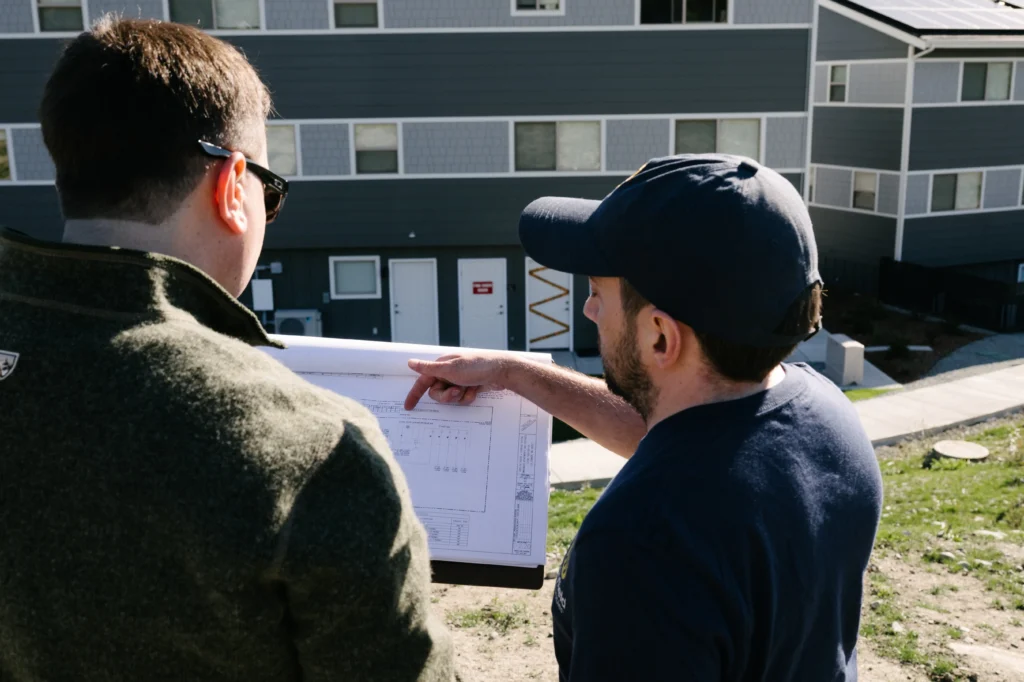
The throughline across use-case planning, equipment selection, integration strategy, and controls is that upfront due diligence and engineering experience can go a long way toward mitigating project risk. Determining goals and constraints early helps to identify critical questions and to avoid costly pitfalls that can bring a project to a halt.
Mitigating risks for clients by asking the right questions early is central to our approach at Mayfield Renewables. It’s why we offer independent feasibility analysis as a standalone service, and why we are developing the Mayfield Standard, a broadly applicable framework for the development of commercial microgrid systems.
Frequently Asked Questions
How long does a Feasibility Analysis typically take?
Timelines vary depending on system complexity, stakeholder responsiveness, and access to essential data, among other factors. Feasibility studies for projects in C&I (commercial and industrial) generally take several weeks to a few months.
Is equipment integration strategy only a concern on large or complex projects?
No. It applies any time a project sources components from more than one manufacturer without a single integrator managing the full system, even on relatively simple installations. Early engineering involvement can help identify these gaps during preliminary design.
Who typically leads the controls conversation, the client, the EPC, or the engineering firm?
The engineering firm usually initiates it during preliminary design, when major components are being specified, often through development of a conceptual sequence of operations document. The EMS and controls providers will become more involved as the project moves toward construction, and will lead the commissioning process post-construction.
When should equipment vendors be brought into project conversations relative to permitting?
Generally once use cases and equipment categories are defined, but before permitting or interconnection applications are finalized, to avoid expensive resubmissions caused by later substitutions.
How does a conceptual sequence of operations differ from a full controls narrative?
The conceptual sequence captures high level functional goals during preliminary design and can be developed independently of the EMS provider. The full controls narrative, developed later, translates those goals into detailed programming logic for construction.
Mayfield Renewables provides expert microgrid feasibility consulting and full engineering design for microgrid systems. Download a sample feasibility report here. Reach out to discuss how we can support your project!