

Technical Article
An Introduction to Power Studies for Solar and Battery-Based Systems
Power studies are often treated as a late-stage checkbox—until they aren’t. Projects can be delayed, redesigns may be necessary, and benefits of the studies may be missed if a power study wasn’t performed early enough, or was done incorrectly. The reality is that power studies aren’t just documentation, they directly influence equipment selection, safety and system performance.
A power study is a simulation-based analysis used to evaluate how an electrical system behaves under both normal and abnormal operating conditions. The core power studies include the load flow study, which establishes the baseline performance of the system during normal operation, and the short circuit, arc flash, and protection coordination studies, which evaluate system behavior under fault conditions.
While each of these studies can be performed for both AC and DC systems, this article will focus on AC power systems. AC studies are more mature, are supported by well-established industry standards, and are more commonly required across the types of projects we encounter.
Reasons to Perform a Power Study
The value of performing power studies on a project can be grouped into two key categories: electrical safety and code compliance. The examples provided below are not all-inclusive.
Electrical Safety
Electrical safety is a critical component of any energized project, and power studies play a key role in protecting both personnel and equipment. One of the primary hazards evaluated in these studies is the risk of an arc flash event. Anyone working on or near energized equipment is exposed to this risk.
The severity of a potential injury can be significantly reduced by wearing the appropriate personal protective equipment (PPE), which is determined through an arc flash analysis. A protection coordination study can further improve these results by optimizing protective device clearing times, helping to reduce arc flash incident energy where possible.
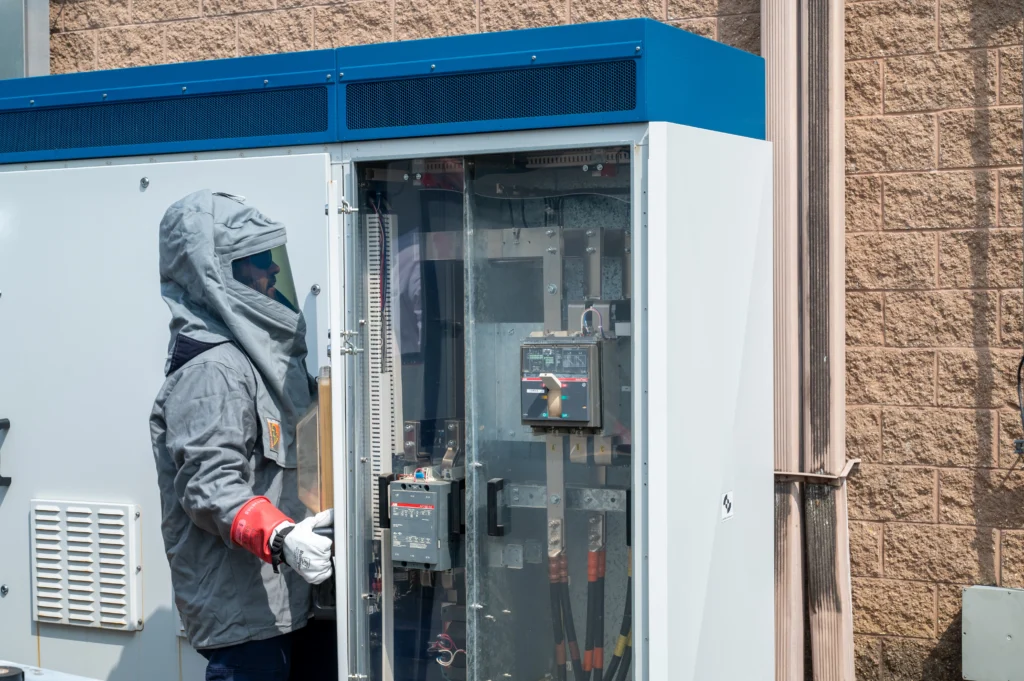
In addition to personnel safety, power studies also address the protection of equipment. Short circuit studies answer the fundamental question: will buses, conductors, and other system components withstand the available fault current without damage?
Short circuit analysis determines the maximum fault current at each location within the system, which is critical for verifying proper equipment ratings. If a protective device is subjected to fault current beyond its capability, it may fail to operate as intended, potentially becoming damaged or destroyed, allowing the fault to persist until cleared by an upstream device. This can result in unnecessary equipment damage and larger portions of the system being taken offline.
Proper equipment functionality also contributes to a safe working environment. The load flow study steps into the spotlight here by evaluating system performance under normal operating conditions. This analysis confirms that voltage levels remain within acceptable limits at all equipment locations, that conductors are properly sized for the expected load and voltage drop, and that any reactive power requirements are adequately addressed.
Without this validation, systems may experience low-voltage conditions, excessive losses, or overloading of conductors and equipment. These issues can lead to reduced equipment life, nuisance tripping, and in more severe cases, overheating or failure during normal operation.
Each of the core power studies provides meaningful safety benefits. The greatest value is realized when they are used together to reduce risk to personnel, equipment, and conductors.
Code Compliance
Every architect, engineer, and contractor must work within the confines of applicable codes, standards, and regulations, such as OSHA, the NEC, IEEE, and utility requirements. Power system studies fall within these same constraints.
The National Electrical Code (NEC) does not contain many direct requirements for performing power system studies. Instead, it establishes performance-based requirements that are often validated through one or more of these analyses. In many cases, the NEC defines the requirement, but power studies are the tool used to demonstrate compliance.

Several key NEC articles drive the need for power studies in practice, including requirements related to arc flash labeling, equipment interrupting ratings, selective coordination, and distributed energy resource interconnections.
NEC 110.9 requires that equipment have an adequate interrupting rating, while 110.10 requires that equipment withstand fault conditions based on the operating characteristics of the protective devices. These requirements are typically validated through a short circuit study.
NEC 110.16 has long required equipment to be marked with an arc flash warning label. Historically, the code did not explicitly require values such as incident energy or arc flash boundaries to be included, and many installations complied by applying a generic warning label.
This is changing in the 2026 edition of the NEC. Arc flash labels will now be required to include key information such as incident energy and arc flash boundaries, significantly increasing the level of detail expected on each label. While lookup tables and other simplified methods are available, an arc flash analysis provides a more accurate representation of system conditions, and becomes increasingly appropriate as system size and complexity grow.
NEC 240.12, introduced in the 2020 edition, requires that systems needing an orderly shutdown have coordinated overcurrent protection. While this requirement can be somewhat ambiguous, explicit coordination requirements exist in NEC 700.32, 701.32, and 708.54 for emergency, legally required standby, and critical operations power systems.

In addition to the NEC, regulatory requirements and industry standards provide the technical framework for performing these studies. OSHA establishes workplace safety requirements, often enforced through compliance with standards such as NFPA 70E. NFPA 70E and IEEE 1584 define the methodology for arc flash analysis, while the IEEE C37 series addresses interrupting ratings, equipment duty, and breaker performance for short circuit studies. IEEE 242 provides guidance on time-current coordination and protection philosophy.
Enforcement of these standards can vary by authority having jurisdiction (AHJ), so it is important to confirm specific requirements for each project.
When to Perform a Power Study
The benefits of the power studies will naturally lead to the question of which power studies might be appropriate for your project, and when. To answer that question, let’s get into each of the four core studies and discuss what they are, when they are needed and why they matter in the overall scheme.
AC Load Flow Studies
The AC load flow study establishes how voltage, current and power flow across the system. In a small system, experience and hand calculations can provide a good approximation for the normal operating state of a system. Larger projects include more impedances, reactive power and branching sources, all of which affect the voltage, current and power levels at each location, making hand calculations extremely difficult and time consuming.
When is an AC load flow study needed? Utilities need to know the behavior of their grid at all locations, so utility projects and larger interconnections can trigger a utility requirement for the AC load flow. Additionally, systems with power factor requirements may utilize the AC load flow study to show compliance with the required power factor. As mentioned earlier, the larger and more complex a project is, the more useful the AC load flow study can be to ensure all parts of the system are operating as intended under normal conditions. For abnormal conditions, one of the tools we use is the AC short circuit analysis.
AC Short Circuit Studies
An AC short circuit study determines the magnitude of fault current available at different points in the system. These fault currents are used to verify that electrical equipment has adequate interrupting and withstand ratings, and to ensure protective devices can safely clear faults. In smaller systems, conservative assumptions and experience may be sufficient to estimate available fault current. However, as systems grow in size and complexity—with multiple sources, transformers, and varying impedances—the available fault current can vary significantly throughout the system. In these cases, detailed modeling is required to accurately capture worst-case conditions.
When is an AC short circuit study needed? AC short circuit studies are commonly required to demonstrate compliance with NEC 110.9 and 110.10, ensuring that equipment interrupting ratings and short circuit current ratings are not exceeded. Utilities may also require fault current calculations at the point of interconnection as part of the interconnection process.
Additionally, projects with multiple sources (such as PV and BESS), medium voltage systems, or large distribution equipment benefit from a short circuit study to properly specify equipment ratings and avoid costly equipment replacements. As system size and available fault current increase, the importance of this study grows to ensure both safety and code compliance.
Protection Coordination Studies
While the AC short circuit study determines the magnitude of available fault current, it does not define how long a fault will persist. The duration of a fault is governed by the system’s protective devices, which is evaluated in a protection coordination study. This study evaluates how protective devices operate during fault conditions and ensures they respond in a controlled and coordinated manner. The goal is to isolate faults by allowing the closest downstream device to operate first, while upstream devices remain closed unless necessary.
This is typically performed using time-current characteristic (TCC) curves, which show how quickly devices such as breakers, relays, and fuses respond to different levels of current. Proper coordination ensures reliable system operation, minimizes unnecessary outages, and protects equipment from damage during fault conditions.

When is a protection coordination study needed? In addition to the requirements listed in the Code Compliance section above, coordination studies are often needed for systems with multiple protective devices in series, particularly in medium voltage systems, utility-interconnected projects, and larger commercial or industrial installations. Utilities may also require coordination as part of interconnection to ensure proper operation with their protective schemes.
In addition, projects with multiple sources, such as PV and BESS systems, benefit from coordination studies to ensure protective devices operate correctly under varying fault contributions. As system complexity increases, coordination becomes more critical to avoid nuisance tripping and to ensure faults are cleared as selectively and quickly as possible.
AC Arc Flash Studies
In addition to system reliability, coordination directly impacts safety. The clearing time established in the coordination study is a key input for arc flash analysis and can significantly affect incident energy levels. The AC arc flash study evaluates the thermal energy released during an arc fault and determines the level of hazard to personnel working on or near energized equipment. The study calculates key values such as incident energy, arc flash boundary, shock hazard, and the required level of personal protective equipment (PPE).
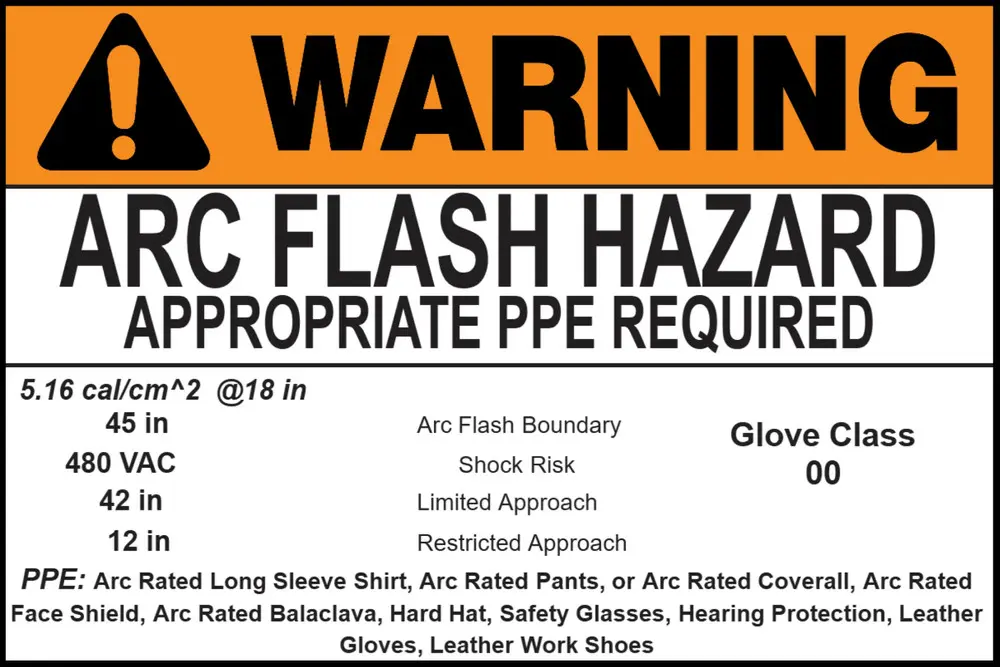
These results are based on system voltage, available fault current, and most importantly, the fault clearing time established by the protective devices. While short circuit analysis defines the magnitude of the fault, and coordination defines how quickly it is cleared, the arc flash study translates those conditions into real-world safety requirements.
When is an AC arc flash study needed? Arc flash studies are required to support compliance with NFPA 70E and labeling requirements in NEC 110.16. These studies are necessary wherever personnel may interact with energized equipment, including switchgear, switchboards, panelboards, and motor control centers.
In practice, most commercial, industrial, and utility-interconnected projects require an arc flash study to ensure equipment is properly labeled and workers are informed of potential hazards. Systems with higher available fault current or slower clearing times will typically produce higher incident energy levels, increasing the importance of accurate modeling.
In many cases, the arc flash study becomes the final check on system design. High incident energy levels can reveal issues with protection schemes that may not be obvious from coordination alone. The arc flash study is where all other power studies come together, which translates system design and protection into clear, actionable safety requirements for the people who interact with the equipment.
Mayfield Renewables is an engineering consultancy specializing in commercial and industrial PV and microgrid engineering. Contact us today for a consultation.