

Technical Article
Raising the Bar: Key Takeaways from the 3rd Annual Mayfield Renewables Education Summit
On September 29 and 30, 2026, we hosted the third annual Mayfield Renewables Education Summit at the David Rubenstein Forum on the University of Chicago campus. Over two packed days, developers, EPCs, manufacturers, and industry leaders gathered to tackle the complexities of commercial and industrial (C&I) solar, storage, and microgrids. Led by Mayfield engineers and guest subject-matter experts, the summit delivered best-in-class training grounded in real-world experience.
In an industry with more and more events, few are built around independent technical education, and even fewer focus on the commercial mid-market. That gap is what inspired us to create the Education Summit. After successful events in Austin and Seattle, we were thrilled to come to the Midwest, a leading market for distributed generation.
Setting the Stage
The Summit opened with two sessions setting the stage for the two-day curriculum. First, leadership from Mayfield Renewables was joined by Aron Bowman, President of ELM MicroGrid and ELM Solar, and Jason Petermeier, COO and CTO of ELM MicroGrid from leading BESS provider, ELM Microgrid, to introduce the Mayfield Standard as an important throughline to the entire event. The Mayfield Standard is a vendor-agnostic framework outlining the many steps and stages of a multi-DER project and establishes a mutual, predictable language among all stakeholders. The panelists addressed the communication and execution gap that has emerged between developers, EPCs, manufacturers, and financial underwriters. They explained how a unified Standard can protect project margins and support long-term asset performance.
The second panel spoke from their collective experience architecting recent (and former) progressive policies in Illinois. They highlighted how the Clean and Reliable Grid Affordability Act (CRGA) is reshaping distributed solar and storage in the state. CRGA introduced a 3 GW storage mandate and utility-dispatched virtual power plants (VPPs) in Illinois. Scott Vogt, Founder and Principal of Vogt Energy Advisors and formerly of ComEd, and Kevin Borgia, SunVest Solar’s VP of External Affairs and Policy, discussed how developers can navigate utility grid constraints and maximize project value under the state’s new scheduled dispatch and procurement frameworks.
"I really like the direction the summit continues to go. Specifically, the design and engineering angle. This level of expertise all at one event continues to elevate my perspective and expertise. Also, the Mayfield Standard is long overdue concept and I am very excited for this to become industry standard."
- feedback form response from attendee
Three Core Themes
Training across four classrooms centered on three key themes drawn from the challenges our engineers saw C&I developers face most often over the last year: PV+ESS codes and standards, design considerations, and microgrid development best practices.
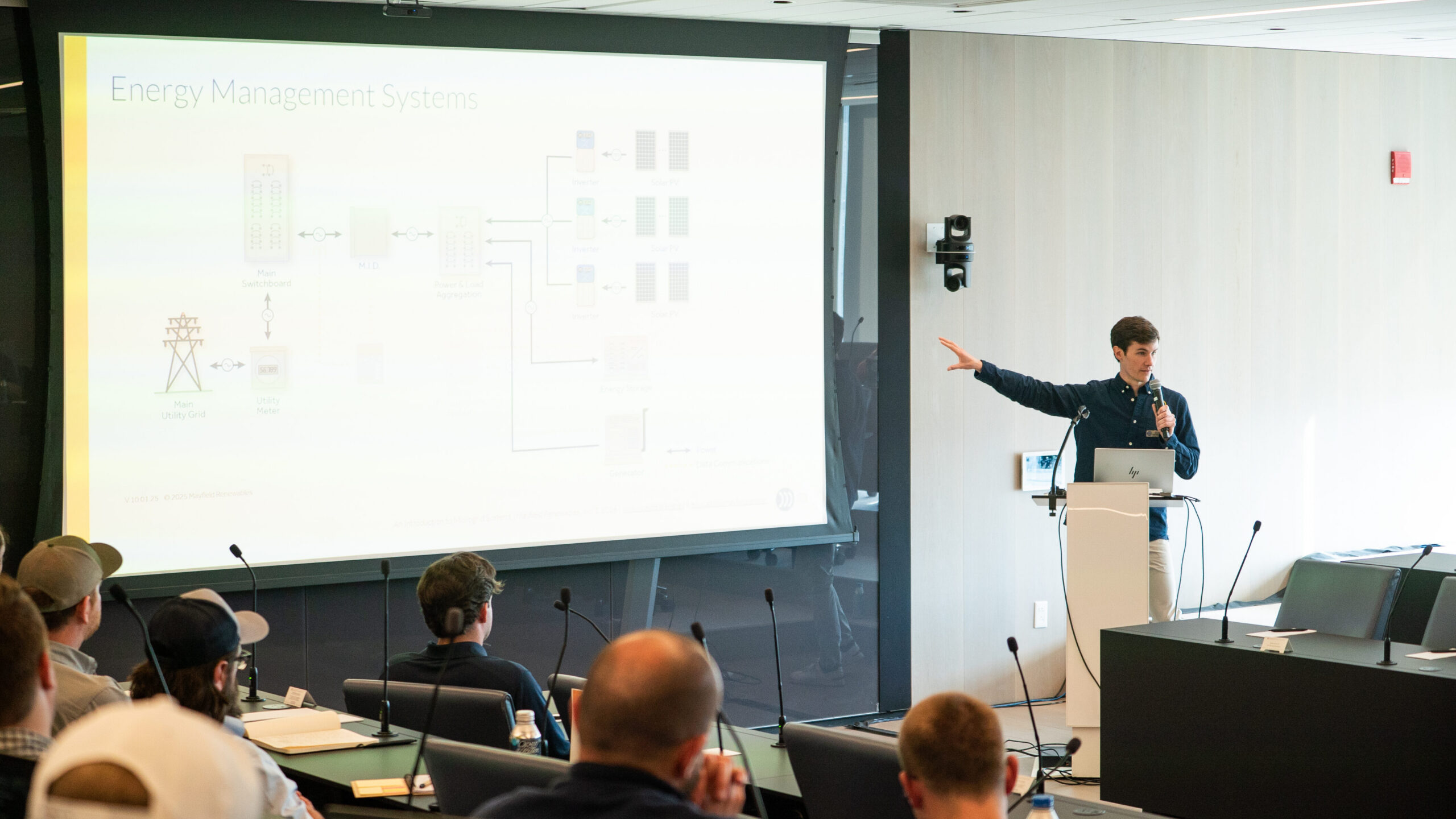
Codes and Standards change every few years, and each new cycle can affect projects already in the pipeline. Many jurisdictions have yet to adopt the 2026 National Electrical Code (NEC), but understanding updates is crucial for developers and EPCs to stay ahead of the curve on current safety and compliance requirements and ultimately gain approvals for their projects. Lithium-ion BESS deployment is also growing, which brings unique fire safety challenges, so sessions covered topics from the 2024 International Fire Code (IFC) and 2026 NFPA 855, along with the latest updates to large-scale fire testing and hazard mitigation analysis requirements. Attendees were also introduced to UL 3141, the first consensus standard dedicated to power control systems, which opens new design opportunities such as oversized PV or BESS resources.
The Design Considerations track focused on the decisions that often drive change orders and budget overruns during the engineering stage. Nearly every grid-tied system requires at least one transformer, yet specifying the right one on time and within budget remains a common hurdle. Medium-voltage interconnections are becoming more common as larger DERs connect to the grid, and power studies, such as arc flash and coordination studies, are often required before a project can move forward. With more than 23 GW of commercial solar installed since 2010, sessions on repowering also prepared attendees for the growing number of systems reaching the end of their life cycles.
Microgrid Project Development carries higher investment, expectations, and stakes than a typical PV-only system, and early missteps become more costly as development progresses. The microgrid track guided attendees through the full project lifecycle, from feasibility studies that identify risks during planning to the economics and funding structures that make projects financially viable and the controls that serve as the “brains” of every microgrid.
"I feel like I have a much better understanding of microgrid concepts"
- feedback form response from attendee
Showcasing Expertise With a New Standard
Commercial multi-DER and microgrid projects have historically lacked an industry standard to guide their development. Integrating several energy sources with behind-the-meter infrastructure involves more stakeholders, more expertise, and far more upfront planning than a single-asset project. A single missed scope item or an overlooked risk can easily derail the entire project.
Our CEO, Jacob Betcher, and Director of Engineering, Jon La Follett, led a session introducing the Mayfield Standard, a vendor-agnostic roadmap built in response to that gap. Drawing on our team’s experience supporting hundreds of projects each year, they walked attendees through the core development phases and milestones, defining the “can’t miss” scope items that carry a project from origination through end of term.
The session also gave attendees the opportunity to share input on the Mayfield Standard itself. Their feedback sparked some of the best conversations of the week, and it will help shape where the Mayfield Standard goes next.
"I am so happy to see this concept coming front and center. This process outline has been needed for quite sometime. I very much am looking forward to the mass adoption of this or a variation of this standard. The amount of issues that may be avoided because of this standard existing is immeasurable!”
- feedback form response from attendee
Backed by Industry Leaders and Expert Trainers
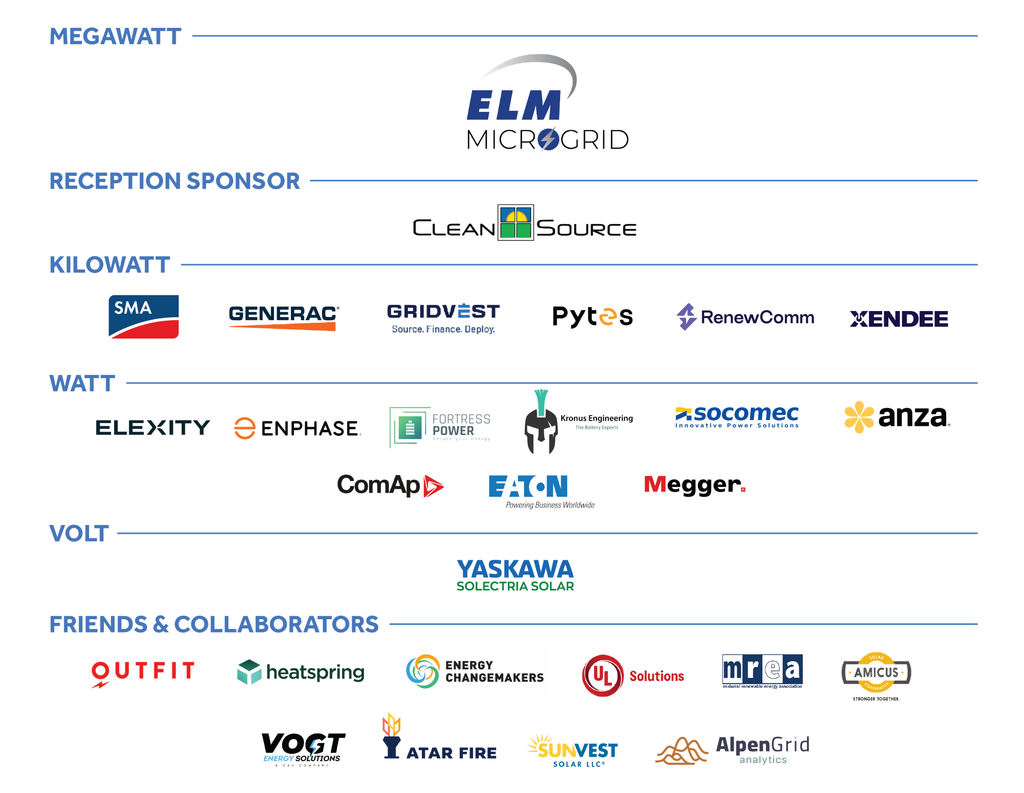
We are grateful for the support of our 2026 partners, without them, the Education Summit would not be possible.
Training was led by the same Mayfield engineers and consultants who work daily on C&I solar, storage, and microgrid projects. This connection allows each session to draw on lessons from current project work. We are grateful to each of them for sharing their expertise:
Ryan Mayfield, Jacob Betcher, Jon La Follett, Ryan Mateo, Adam Stone, P.E., Lucas Miller, Zach Snyder, Tyson Bittrich, Alberto Hernandez, Greg Kamps, Vivian Crespo, Mike Morse, Hamilton Hutchinson, P.E., Israel Salazar, Sam Smith, Laura Williams (Generac), Scott Picco (UL Solutions), Nicholas Bartlett, P.E. (Atar Fire), Scott Vogt (Vogt Energy Advisors), Kevin Borgia (SunVest Solar)
"Very knowledgeable instructors." & “Amazing job filling in knowledge gaps!”
- feedback form response from attendee
Thank You!!!
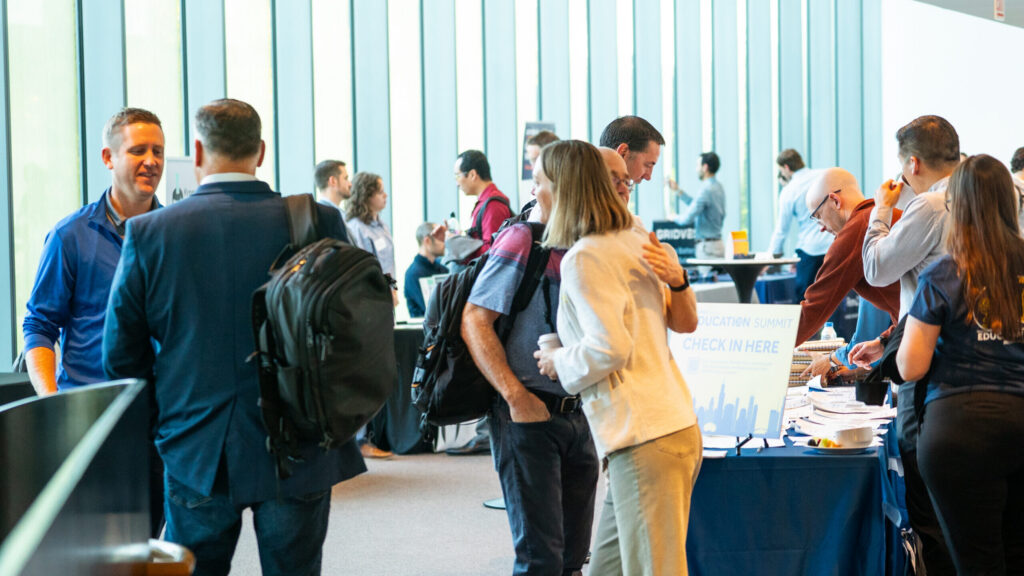
We want to thank everyone who took time out of busy schedules to attend. Your questions and engagement are what make the Mayfield Renewables Education Summit valuable, and the feedback you shared will help shape both the Mayfield Standard and future events.
Planning for the 2027 Education Summit is already underway, and we look forward to announcing the next location soon!
We turn technical complexity into performance certainty. Whether you need engineering, feasibility, or training for solar, storage, and microgrid projects, Mayfield Renewables can help. Contact us today to get started.
Don’t miss what’s next. Sign up for our newsletter to hear about the upcoming webinars, the next Education Summit, and new resources, straight to your inbox!